Recently someone asked me, out of the blue, where they could find my books for sale. The question was a surprise, coming from this person. I thought that anyone with a question like that would simply “google it.”

Curious about what would come up, I did just that, a few minutes ago, here at my desk in the warm end of the workshop at the Hoarfrost, on a beautiful cold clear morning. And no, I am not going to thank the world’s weathiest man Elon Musk for the Starlink system that made such a process possible out here today. But that topic is another can of worms.

Kinds of Winter is my most recent book, published 2014, and out of the four books I have in print it is, I’ll admit, my favorite. It is available as an e-book, an audio book, and a paperback. All through Wilfrid Laurier University Press, or your local bookstore, or even (gasp) Amazon, apparently.

North of Reliance, first published in 1994, and re-published in 2016 as a second edition (no changes to my writing, some new and additional photos, and a new Preface) by Raven Productions in Ely Minnesota, is still out there for sale. Brand new copies appear to be On Sale now by the company that bought out Raven some years ago: Legacy Bound. I am not on great terms, let’s just say, with Legacy, but hey, they do have the remaining boxes of these books, and the books are made of paper and thus of trees, and thus before I start the process of bringing out a third edition of this book, I am steering you to Legacy. However, I don’t think they can ship to Canada, by the looks of things on their website.

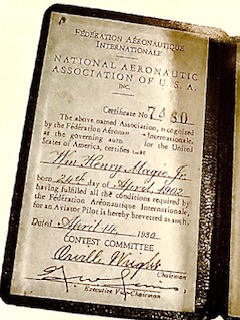
Legacy, having bought out Raven, also holds most of the hardback copies of A Wonderful Country, , the 2005 edition, also a favorite book of mine. It is a collection of the stories of Bill Magie (pronounced same as McGee), an old-timer who lived a colorful life in and around the Canoe Country of the Minnesota – Ontario border. Bill was at various times in his life a wilderness surveyor, a pilot (with a license signed by Orville Wright — see my post here from last April), a canoe guide, and a kingpin in the long battle to preserve the Quetico-Superior canoe country as capital-W wilderness. Bill was a master storyteller — ribald and lively. I met him as a young man when I was attending Northland College, and I tape-recorded, transcribed, and edited his stories back in 1978.

Cold Nights, Fast Trails, my 1989 book about my early years as a dog musher and sled dog racer, seems to be still out there, in nooks and crannies of used books online. It was published by NorthWord Press, but it has long been out of print.

There you have a longer-winded answer to this question than I intended.

This will not be my post here for December, but more in the realm of connecting readers of this blog to these books of mine, and — as luck would have it — alerting you today to the On Sale status of both North of Reliance and A Wonderful Country, at the Legacy Bound website.

One final note for locals in the NWT: The fine folks at the Yellowknife bookstore have copies of North of Reliance and Kinds of Winter right on the shelf. They deserve your support, as do small independent bookstores everywhere, in my view.

Over and out.

It is late on the final evening of the month and I am in Yellowknife for the start of a round of wildlife survey flying, and I am attempting to do three things within the coming hour:

  1. Put out at least some semblance of a post here, so as not to break my string of “one per month”;
  2. Warm this little three-season trailer up above 10 degrees C. (50 degrees F.) before I turn in for the night; and
  3. Turn in for the night.

As I have written here in November at least once in the past, I consider November the finest month of the year for indulging the luxury of that mysterious animal necessity called sleep.

I got to thinking again about sleep back in late October, when some truly lousy weather forced me to set down about sixty miles northeast of Fort Nelson, B.C., at sunset, and quit trying to make VFR flying conditions out of what were rapidly turning into hardball IFR conditions. I was alone, bringing the second of our two little bush-planes down to the airport at Fort Nelson, on floats, there to land on the grass infield alongside runway 08-26, and call it a float season finished at last.

The weather forecast that day had been calling for improvement along the 500 miles between our home base and Fort Nelson, but as we all know, “them are only forecasts.” I had been making steady progress with a few diversions, hour after hour at 90 or 95 knots, keeping sight of terra firma, but as I closed in on Fort Nelson things took a dramatic turn for the worse. And then, as if to add insult to injury, I saw what was causing part of the problem. Struggling along down low, throttled back, a notch of flaps down, cursing and muttering, I looked through the clag beneath and around the plane and suddenly realized — with a whiff all too familiar across the continent these past few years — what I was dealing with. Yes, there was snow on the ground. Yes, some of the smallest lakes were already iced over, and yes, there was a nasty mix of cold drizzle and mist in the air, but there was also smoke. Wildfire smoke rising in wisps and narrow plumes, right from the snow-covered spruce bogs.

I think I uttered a few words that might have astonished my elders, but then I knew deep-down what I needed to do, in the minutes that were left in that day, the 21st of October. I needed to find a lake that looked like a decent bet not to freeze overnight, check its shoreline and look at its water for depth and reefs, and put the plane down. In other words, I needed to give up on the idea of reaching my destination.

This can be a difficult decision for a pilot to make. We don’t make it very often. Not to turn back, not to go forward, just to put down and quit before somebody gets hurt. But it is, in my experience, a relief to come to that decision.

I came across a passage by Jeremy Jones, writing in Mountain Gazette about his life as a snowboard aficionado, dropping down vast steep slopes of untracked powder snow, and it made me nod my head:

“One critical skill is learning to turn around… ‘I haven’t turned around in a while’ is reason enough to reverse course… It’s a muscle that needs to be flexed… “

I had a nice campout there on the snowy shore of Outaanetdeya Lake. Being late October, it was chilly, but I had ample blankets and bedding, and a little pup tent. (I had forgotten just how little it is.) I usually get a bit of grief from my mechanic friends at Fort Nelson, when I come there for inspections, because I do carry a surfeit of “survival gear” in my planes. But they were not chiding me the next day, when I did finally show up, because they knew that the night had been chilly and very long. “Get any sleep?” And I could honestly answer that yes, I had gotten sleep, a good solid ten hours I bet, worrying only a bit that overnight the lake was going to freeze and force the little floatplane to dabble in a new career as an icebreaker. But in the long hours of darkness I could still hear the chuckle of little waves lapping the boggy shoreline a few feet from my bed, so I rested assured.

Which brings me finally around to Sleep, and to something that dawned on me a few days after that impromptu campout. Training in Survival should add one more factor to the “Rule of 3’s” — the reminder that in a survival situation we can last 3 minutes without air, 3 hours without shelter, 3 days without water, and 30 days without food.

Next time I get a chance to lecture on that topic, I am going to add one more, and that is Sleep. Often we do not stress Sleep in training for and considering survival. To keep going with the “3 theme”, may as well make it a nice even 30 hours without sleep, at most. Because yes, you can perhaps go that long, but you are nowhere near competent or capable or even coherent as that 30-hour mark comes close.

Good night, sleep tight…

In case you have not noticed, the Toronto Blue Jays are back in the World Series. They were there last in 1993. We listened to the game here tonight, on the radio, and the Dodgers took it so there will be one more game, game seven, played tomorrow night in Toronto. And although I pay almost no attention to any major-league sports during the rest of the year, I do enjoy listening to World Series baseball games on the radio. Probably because it brings me back to my roots, the Cubs, Wrigley Field, 1969, but most of all to a memorable overnight paddling trip in sub-zero weather, a trip mostly inspired by R.M. Patterson of Nahanni River fame.

In 1992, on the eighteenth of October, Kristen and I were here, and as freeze-up loomed we were feeling a bit stuck. Our faithful 25 horsepower Evinrude outboard was kaput.  Maybe today, 33 years on, we could repair it, but back then, knowing what we knew about fuel pumps and impellers and carburetors, we were stymied.

We did not know a lot about motors, but we both knew damned well that there was a big sack of postal mail waiting for us across the wide and icy expanse of McLeod Bay, at the weather station in Reliance. We knew it was there because we could talk to the two fellows at the station by radio. We knew, also, that there would be no more mail coming until sometime in December. We knew there were lots of good things in that big canvas Canada Post bag – letters from near and far, birthday cards, gifts… It meant everything to us, in terms of contact with the world beyond here. To say that Kristen, especially, was really eager to see inside that mailbag would be an understatement.  

In January of 1929, in January, down in the folds and twists of the lower Nahanni River, R.M. Patterson had come to the conclusion that he had better make his way out, downriver, somehow. His trapping partner had gone away and was overdue – no word, no sign.  Food was running low.  He also alludes to the fact that there was a message of some sort to get out to Fort Simpson, having perhaps to do with mineral claims.

So, Patterson being Patterson, he set off down the Nahanni for the Liard, and for Fort Simpson on the Mackenzie.

In January. All by his lonesome.

It was a combo trip to send shivers down the spine of anyone who can imagine its details. Canoe and dogteam:  dogs pulling canoe and gear on the sled, over the frozen ice; canoe carrying dogs and sled and gear over stretches of flowing water. In January. (Did I say that already?)

But off he went. He felt like he needed to try.  And I remember sitting at my desk in our little cabin here, re-reading that account, and thinking, well, I can see across the bay… the mail bag is there…

Today I dug out my journal and I think I’ll just post its entry from back then, wish the Blue Jays good luck tomorrow night, and sign off. It’s still a pretty good story, I think.

20 October, 1992

Hoarfrost River

Back yesterday from an unusual overnight journey to Reliance. Sitting here Sunday morning reading Patterson’s account of a winter’s journey “to the mail,” I decided to just go. Packed the 14-foot canoe with some food and gear – axe, rifle, rice, a caribou heart, butter, bread, cookies, coffee, Coleman stove, repair kit, sprit-sail rig, HF radio, clothes, sleeping bag, tarp, and matches.

Pushed off at 12:55; temperature minus ten C. or so, with sunshine, but clouds off to the west. Within minutes I unfurled the sprit rig and began to pick up an extra push from a light northwest breeze, and also a push from the long swells still rolling in from the west after a three-day blow.

I rounded Dallas Point near Hawk Owl in just fifty minutes – a stretch I had estimated would take two hours. At the island beyond the burn, the one with the square rock atop it, I found myself easing the canoe south, toward the portage, cutting off the corner of the bay.  It is a three-mile crossing from there, and I did not want to just blunder out into it without thinking it carefully through. The weather was stable, the breeze light, and all systems looked “go.” Thus are decisions made – sometimes one truly is “in the right place, with the right people, at the right time, with the right equipment.” Sheer luck can bring it all together, and that afternoon it did. The crossing took just 45 minutes, and three hours after leaving home the canoe bumped against the ice-coated cobble and gravel of the little beach at the portage. 4 p.m.

When I got out of the canoe I was cold, as cold blood from my legs was suddenly circulating again. I was also in a clumsy state of hurry – a feeling of impending darkness and eagerness to be onto the hiking part of the trip.

Began walking at about quarter to five, having tarped over my gear and piled some dry wood nearby for a fire. I hoped to return that evening, following my tracks in the snow back to the canoe. Soon I realized the difficulty that would pose, since the peninsula was covered with fresh caribou tracks wandering in all directions. I would have a hard time following my trail by headlamp. The sky was overcast by then and the moon is waning and rises after midnight. Gradually, fatigue and caution replaced gung-ho enthusiasm, and I adopted a new plan:  stay in Reliance, leave before daybreak, and get back to the canoe early in the morning.

That is how it worked out, and my luck held. The final mile into Reliance was made in darkness, and I knocked on the door of the weather station at 7:15 or so.  Mark and Brent were expecting me; Kristen had called them on the HF radio. I called her the same way, to tell her of my arrival and my plan, and settled in to watch the second game of the World Series. Toronto beat Atlanta 5-4 with a ninth-inning two-run homer by Ed Sprague, a pinch-hitter recently up from the minors.

The morning walk was difficult, taking three and a half hours over the same ground I had covered an hour faster the night before. In the dark most of the way, well before dawn, and with a heavy pack. A grind. Dim light, dull grey overcast, caribou clattering away from me through thick tangles of alder and spruce. Daylight at last, and at 9 a.m. the canoe again. Pushed off at 9:30 in fresh dry wool sweaters, thinking again about a frame pack in light of all the heavy carrying we do. Why did those fall out of favor?

Luck was holding – the crossing to the north shore was safe, but cold and choppy.  No sail up, and I had to stop once to thoroughly rewarm the fingers of my left hand, all the while drifting downwind into the open bay. But they stayed warm after that. Once to Box Top Island the wind was behind me, and I stopped to rig the sail again. Took off with good speed and soon rounded the point just east of home. Paddled to shore through skim and slush ice, and soon was inside with my sweetie, warming and eating, and – of course – reading our mail.

We tuned into all the rest of the World Series that year, on the AM radio out of Edmonton, and we still do listen to most of them, now by Sirius radio. 

Whenever we do I still think of that overnight, and of watching the game on the television at the weather station, beamed into that miraculous 6-foot wide satellite dish.  Those caribou that over-ran the Fairchild Peninsula that autumn, that little green Tremblay canoe, that blue nylon sprit sail.  R.M. Patterson and Dave Winfield. Go Blue Jays.  
Ed Dallas — father, husband, Beargrease musher, cross-continental bike rider, raconteur, part-time movie-actor (Iron Will), Minnesotan, and Force of Nature, died last Sunday, the 21st of September. I will miss him. He was an inspiration to me. He and Julie, his wife of fifty-one years, visited us here twice, first in the early 1990’s and again in 2018. He always loved these monthly musings of mine and he let me know right away whenever he read them. Of course, for anyone writing anything and putting it out there on display to the world, there is nothing better than hearing from a kindly reader like Ed, with some homespun literary criticism such as”Wow, you knocked that one right outta the park!” (When dealing with any aspiring writers in your lives, trust me, people:  flat-out flattery will get you many miles down the road.)

It was last Sunday, too, the final day of Summer, that Kristen and I went together by boat down the coastline east of here. We pulled in near the mouth of Tent Creek, to pick berries and have a picnic.  Getting there, we rounded what has been “Dallas Point” ever since Ed and his family came here on a canoe voyage in 1992.

Dallas Point, for there a legend was made 33 years ago. We were paddling our twenty-six-foot voyageur canoe, a big fiberglass replica painted up to resemble (at a distance) a birch-bark canot du nord of fur-trade times. It was a flat-calm hot summer day, and we were paddling but not paddling too fast for there to be some fishing lures trolled behind us in the water. Just a few minutes earlier, Kristen and a photographer friend of ours, Donna, had hooked a fish and landed it into their smaller canoe. Donna was struck by an idea, as we rounded the steep rock headland where it drops off into the deep blue of the bay.  She asked Ed, who was in the stern steersman position of the big canoe, whether he would mind if – just for the sake of photographic artistry – the already-caught lake trout could be attached to Ed’s line, so he could hoist it sparkling in the sunlight off the gunwale of the birch-bark replica. Ed, being Ed, said that would be just fine with him, so the shot was set up, twice-caught fish and all. 

Another fellow on that trip was Jim Cotton. Jim had been up to McLeod Bay a few years earlier, as part of a team of paddlers who heroically delivered three custom-built 24-foot canoes all the way from Yellowknife to Walmsley Lake, the headwaters of the Hoarfrost River. Another long story, but not for tonight.  Jim had been in the Vietnam War – serving as a medic if I am not mistaken – and while there he had contracted some form of brain fever that severely affected his speech for the rest of his life. His speech was impaired, but not his mental clarity. He had a sharp sarcastic wit, but his lines were delivered at a snail’s pace while he painstakingly formed the words. As Ed hoisted the twice-suffering trout into the canoe and Donna snapped photos, Jim quipped, word. by. word: “Say. Ed. Did. You. Ever. Catch. A. Live. Fish?”

We all cracked up, but Ed got the last laugh. As we rounded Dallas Point, he kept trolling his spoon, and suddenly he said, “Whoa, back paddle, hold up, everybody, I’ve hooked bottom.” We held our paddles up, the huge canoe with six aboard lost headway, the drag on Ed’s reel buzzed, and then came a string of gibberish from Ed, something along the lines of “arr-ha-ousha-what-the-whoa-whoa-WHOA!” The bottom of the lake he thought he had snagged had suddenly started to move.  He had a live one. A very big live one. Either that or a small submarine.

Maybe Ed did not battle that fish for forty-five minutes, as the story now goes. Maybe it was thirty-five. It was way past twenty-five. And finally, that ancient enormous lake trout – all forty-six pounds of him or her — was lying tangled in the remains of a busted landing net in the bottom of that big canoe.  Ed was beyond excited. Jim was without sarcasm.  The rest of us, knowing that there was no way that monstrous man-handled fish was going to go back into the lake, were trying to guess just how long it was going to be on our camp menu. (Answer – about four long days, for eight of us. Remember my grandfather’s old adage about fish in the fridge, and relatives staying as house-guests: Three days, he’d say. Four at the very outer limit.)

As Ed got older his memory started to fail. I would bet my bottom dollar, though, that catching that big fish on that beautiful summer day on McLeod Bay was a memory that stayed and stayed, somewhere deep. I will bet, too, that none of the other six of us ever forgot that day.

Nor will I forget the night at the end of the trip, when, after the ladies had finished, Ed and Jim and Ed’s son Jay and I all trooped into the sauna to clean up and sweat and cool off with plunge after plunge into the lake. At one point in the festivities (which, I am quick to point out, did not include beer — sad but true), Ed was maneuvering his massive frame and considerable beam  down off the high bench in the hot room when he suddenly lost his balance. He stuck out a huge hand and found a brace against the interior log wall dividing the dressing room from the sauna, and barely kept himself from falling.  That massive log building made a lurch that I honestly thought might have knocked it from its boulder footings.

Jim, steaming silently and ever aware of a chance for some good play-by-play, spoke up through the steam. Word. By. Word.

“Amazing. Catch. Ed. I   can   see    the    headlines   now……    ‘American…     tourist…      injured…       while…      dismantling…      sauna……’ ”

We’ll be missing Ed. He was a gem. Jim Cotton, too, is now long gone. Good times. Times gone by. Were they simpler? Not sure. Seems so, sometimes.

I do look forward to seeing some beloved faces around the campfire up yonder, so to speak. Ed among them. I do fear, though, that we might still be grilling thick slabs of that darned fish, and hoping someone else will finally polish off the rest of it.

Yep, corny post, Dave.  But I know a few who would have liked it just fine.

It’s a time of the year when I do not spend much time writing, but I do spend many hours thinking about things other people have written. Snippets and quips, germane lines and sentences, nuggets that ring true.  Alone up at 7,500 or 9,500 feet, heater on just a bit, -2 degrees Celsius out the window, the sweaty smoky summery world far below, I do love my job.  Most days.

If there has been a theme to this season of floatplane flying, for our little mom-and-pop business, it could be summed up with an imaginary ringing of the phone, and someone launching breathlessly into a harried message (choose an accent): “Yes we were going to come on that date but we are coming two days earlier now, although our luggage has been lost and there’s been a strike so we may be delayed and we would like to change our pickup date and there are some other people coming also and once we are there we would like to stay a little longer than originally planned and we think there will be some other changes because of smoke and weather and wind but we’ll sort those out when we arrive. Uh, if we arrive.”

My dear wife has always maintained that “flexibility is the key to happiness.” This season has been a good one for us to implement that motto. “Nod, smile, and send out the invoices” has been one of our other muttered mottoes, if I am to be honest.

And now it’s nearly done with. Most of the summer float work is finished. Adventurous and inspiring people have been moved here and there, radio-telemetry widgets and gizmos have mostly been retrieved, the geologists have their samples back in the lab, and most of the canoers are back where they live, although there is one trio that is tonight hunkered down, wondering when the 50-knot gale and sideways snowstorm hammering the lower Back River south of Gjoa Haven is going to ease off.

The other day I went northwest from here to retrieve a little gizmo that has to do with a caribou study. It had fallen off a caribou’s GPS location collar at a pre-determined time and day in August, but of course at an utterly random location, caribou being caribou and — thank heavens — still free to move where and when they will. To say that this widget was a “fur piece” from here would be an understatement. It was a straight line distance of 331 Nautical Miles, about 612 kilometres, so bucking a headwind it took me nearly four hours to reach the site in the Husky on floats. (I had a much faster trip home, perched up at ten thousand feet, above a pall of wildfire smoke, in clear cool air, listening to music on the headset. Tough life some days, yes.)

The gift of my day (apart from the invoice generated) was to set down in a part of the north I have only crossed over in winter, and there to be utterly alone, and to have some quiet time to walk around. (Hard at work searching for and retrieving the widget, mind you.) I was about a dozen miles north of the northeast arm of Great Bear Lake. Great Bear is the largest lake completely contained within Canada. An awe-inspiring deep, vast basin of cold clear water. (The only three larger lakes in North America — Superior, Michigan, and Huron — all border the U.S., but Great Bear (#4) and Great Slave (#5) are within our borders, entire.)

Which brings us to the “Bear” part of Great Bear. For years now I have been fascinated by a fact pertaining to barren-ground bear history, a fact borne out by careful reading of old written accounts from the first Europeans to traverse this part of the world, and confirmed by conversations with native old-timers in the small villages and settlements of the far north. Nowadays we have the barren-ground grizzly wandering right across the barrens, north to the Arctic coast, and clear down in Wapusk National Park at the southern extreme of Hudson Bay. We see one here at the Hoarfrost River at least once every few years. But less than a hundred years ago, the many trappers and hunters traveling the barrens immediately north and east of here made no mention of grizzly bears — in their memoirs, their books, or their conversations. Arctic brown bears were known to be encountered only way off to the northwest, in the region of, yep, Great Bear Lake.

Samuel Hearne in 1772, George Back in 1833, Warburton Pike in 1889, David Hanbury in 1902, Ernest Seton in 1907, John Hornby and Helge Ingstad in the 1920’s — all of them in their written records agree that the brown bears of the tundra were far to the northwest, along the upper Coppermine River, and east along a narrow strip of coastline toward Tree River and Bathurst Inlet. That was where they lived, and elsewhere on the Canadian tundra they were vanishingly rare or completely unheard of. I find this gradual barren-ground grizzly range expansion fascinating, because so often we tend to think of things, especially wild and natural things, as fixed and static. The “status quo.” Think again. Nature, it seems, does not do “status quo.”

Another tidbit — nowadays we don’t see very many moose around here in summer. Down here, on the shores of McLeod Bay, I have not seen a moose since sometime last winter. Decades ago, we saw moose and moose tracks and moose sign around home in every month of the year, as we came and went. Not any more.

Come November, and on through the winter, we see plenty of moose. Where are they summering nowadays? They are up on the tundra and seemingly happy to be there. I had thought, when our neighborhood burned eleven years ago, that by around 2025 we would be awash in moose, but apparently they find the barrens even more appealing than the slowly re-greening burn. Is that a function of warming weather? Maybe.

And yet (there’s always an “and yet” in these matters, I think) the muskox herds are still piling pell-mell southbound into the jackpines and aspen of the boreal forest, now crossing the 60th parallel into northern Saskatchewan and northwestern Manitoba, apparently hellbent on grazing and browsing downtown Winnipeg, if not Chicago. Could it be that they appreciate the absence of grizzly bears once they get into the boreal forest? (Grizzlies being one of the few effective predators on muskox.)

I muse about such things when I am perched up at the top edge of “Low Level VFR Airspace.” Maybe it’s borderline hypoxia. I muse about lines from song lyrics, too, and about passages from books I’ve read. There are two such fragments that have been much on my mind lately. I’ll leave you to chew on them, and ramble off ’til next month.

First, a line from a character in Cormac McCarthy’s novel The Crossing, the second book in his Border Trilogy:

“He said that most men were in their lives like the carpenter whose work went so slowly for the dullness of his tools that he had not time to sharpen them.”

And then, from “Gravity” written by Robert Lee Castleman, sung by Alison Krauss on the album Lonely Runs Both Ways.

“All the answers that I started with / Turned out questions in the end.

It’s a rare July morning or evening when we fire up the woodstove to take the chill off the house, but we’ve lit a few warming fires this past month.  I lit one just a few days ago, on the 28th. And last Saturday I stopped through home to re-fuel enroute to Yellowknife after a week-long tour out in a far corner of the NWT. As I climbed out of the plane I caught a whiff of woodsmoke and Kristen said, “Yeah, I decided to stop layering on more sweaters up in my office, and lit the stove!”

“A frosty Friday?” I asked. 

“Well not quite, but close,” she said.

It was my bush-flying mentor Bruce Gordon, always fond of the nuances of language and a clever turn of phrase, who put “frosty Friday” into our lexicon. Sometimes spiced with an additional alliterative f-word, Frosty Friday connotes a hard “not-gonna-happen” response to something.  For example, taxiing away from a jagged pile of boulders after offloading a couple thousand pounds of stuff from a Twin Otter on floats, Bruce might mutter, “It’ll be a frosty Friday before we bring a load in there again, unless they build us some sort of a dock…”

I think the full derivation of frosty Friday is from the classic, “It’ll be a frosty Friday in Hades when such-and-such happens.”  Linked, of course, to the old “Snowball’s chance in hell.”  Not likely, in other words.

It’s ending warm, but it’s been a cold July in the far north. I looked back through my old airplane Journey Logs and found the date of a frosty July morning (a Tuesday, not a Friday) back in 2013, the 16th of the month, when I was overnighting at a fishing lodge down at Taltheilei Narrows.  When I went out to the plane that morning, I was amazed to find an honest coating of frost on the windshield. And as anyone who knows me might imagine, I brought that up in conversations for about the next three weeks – frost in mid-July!  (Yawn.)

This year I think we will finish July with a tally of five or six fires in the woodstove, and that might be a record. As of today it looks looks like our average daily high temperature has been 15.3 degrees Celsius or 59.5 degrees F.  With a breeze, that’s wool-sweater territory for sure. In a canoe, with rain and a headwind, it’s almost mitten time.

My point? Don’t have one, really. But I’ll swerve right over to one now, because I feel some soapbox oratory coming on. This one is related to our sometimes-chilly summer weather hereabouts, and my work in floatplane transportation.

Standing on the dock at a fishing lodge the other day, watching a group of eager but very elderly anglers climb aboard a floatplane, for a day-trip fly-out to a lake at some distance from the main lodge, I heard the guide yammering on about how silly he thought it was that nowadays everyone aboard a floatplane is required to wear an inflatable life-jacket. Not wanting to make a scene, I didn’t interrupt his soapbox soliloquy. It wasn’t my plane and they weren’t my guests.

But I’ll interrupt now:

First, given the size and weight and – ahem – “waning physical prowess” of the heavy-paunched fishermen I saw clambering into that floatplane, I had to agree that it was a little silly, and likely useless, to hand each gent a tiny strap-on pouch that looked like a Victoria’s Secret purse, to serve as his legal “life-jacket.” I knew it was mostly silly and useless, because I’ve been upside down in a floatplane once, upside down in ice-cold water, and that was in the days before we were all required to wear a life jacket equipped with two brightly beaded pull-cords (a.k.a. “rosary beads”) to inflate your ample Mae West flotation.

We got out of the plane that day, and made it to shore, and no, we were not wearing our life jackets when we flipped over. Does that mean I think the ruling forcing us all nowadays to wear them is a dumb idea?  Nope.

I remember another bush-flying mentor of mine, the late Jimmy McAvoy. Every year, around Labor Day, Jimmy would start showing up for a day of Single Otter flying, wearing a life vest of the type sold in those days for wading fishermen – with a little sheepskin patch for your fishing flies, and a rip-cord CO2 canister for inflation. This was 1992 – three decades before the new ruling on life jackets.

Turns out Jimmy had once nearly died of hypothermia clinging to an overturned Helio Courier in the icy waters of a northern lake. The passenger who was with him was not quite as hefty and strong as Jimmy.  Jimmy lived, sans extra floatation. His companion that day, after some desperate hours,  had gone to the bottom before rescue arrived.

And that brings up another point here, fellow pilots:  if your passengers all have life jackets on, your job in the critical seconds after an accident just became a tiny bit easier, because you can reach over and yank the inflation rip-cords on someone else’s life jacket. That person’s chances just got a huge boost, and you can turn your attention to whatever or whomever needs it next. Pull on another ripcord, and even if that person might not be conscious, and could be badly injured, they are not going to sink. 

Yes, these are ghastly, scary scenarios to contemplate. I’m not trying to be a kill-joy. I spent all day flying a floatplane.  It went fine. It will likely go fine again tomorrow, and it’s been going fine for many years.  If we never wanted to take any chances, we would never get out of bed in the morning. And yet, whenever I hear people (including seasoned bush pilots) whine and harp about the “silly, stupid” requirement that everyone on board a seaplane needs to wear a life jacket, it makes me cringe.

Think about this: if you wanted to design a really lousy boat, it might end up looking a lot like a floatplane. And if you were stepping aboard that really lousy boat, and someone offered you a life jacket, would you really say “nah, I’m good.”  (Question mark?)

I’ll stop now. Wear a good inflatable life jacket in a floatplane. It just might save your bacon someday. It may be a Frosty f—-in’ Friday when you need it, but hey, Frosty Fridays do happen. Even in July.

Over the past several years I’ve begun writing notes on things around our place. With a permanent marker I’ve been writing words directly onto things – tools, boxes, pails, bins, and buildings. “Outback Homestead Hints,” to make some unknown day in the hazy future proceed a bit better for some future unknown hazy person, i.e., whoever the heck comes along here next. So far I can’t quite see who they might be, despite much squinting and conjuring. Old? Young? Man? Woman? Family? Bureaucrat? (Extended Family of Male and Female Bureaucrats?!)

Will our outback outpost here on the coast of McLeod Bay – alongside Thaidene Nene National Park, half a mile west from the outlet of the Hoarfrost River – morph into some sort of research centre? Or an outfitter’s base camp? Might it become home to a reclusive copy-editor or consultant, who – with nothing more than a high-speed link to the internet – can work from home and make a living at it? Thirty or forty years ago that last bit would have sounded like futuristic navel-gazing, but now (or maybe “for now”), it is well within the realm of reality.

Because for now, the march down the path toward constant and unrelenting connectivity seems to be a juggernaut. Interesting times in the Far North. We were told a while back that Parks Canada intends to install a free-for-all Starlink antenna up on the roof of the former Catling house at Reliance, so that visitors and wayfarers can simply drift past in their boats or canoes or snowmobiles, and oh, you know, download a movie or a book, check e-mail, or get a weather map, before proceeding on their “wilderness” journeys.

And hey, not just the Far North – interesting times everywhere, don’t you think? Are we on a cusp, or are we on the verge? On the brink (of disaster), or the cutting edge (of a new and enlightened era)? Or are we somehow teetering simultaneously on both? Whither these wild, quiet, and empty spaces? Spaces now even wilder, quieter, and emptier than they were 38 years ago when we – all starry-eyed and young and limber – arrived here to start in on what might today be glibly summarized as “our life and times?”

Who knows what the next sixty or eighty years will see, hereabouts? Not I. But I do often wish I could somehow come back to find out. And about all I can say with certainty about that point of history, three-score or four-score years ahead, is that it won’t be a part of my “life and times.”

I am not feeling particularly morose about this. In truth I am feeling fairly jovial and common-sensical about it, most days. The next chapter or two here are the edge of a vast unknown, now heaving into view on the horizon like the odd refracted mirages we get sometimes in late winter, looking south across the bay, when the distant shoreline looms up far higher than it can possibly be. And if there has been one theme in my life, it has been the jolt of energy, fear, and fascination I get as I glimpse the edge of the unknown.

And so, all common-sensical and jovial, I pocket my handy paint-marker. Then, after ten minutes of trial and error fumbling around, I finally hit upon the proper wrench to open the oil-drain plug on the small Champion generator (unpaid endorsement happily given – these little yellow Chinese knockoffs are the cat’s meow and the best bargain around. Sorry, Honda.) I open the plug, drain the oil, replace the plug, pour in 400 millilitres of fresh stuff, and then whip out my red marker and write “10 mm plug, .4 lt oil, change 100 hrs.” on the crankcase.

On the 4-gallon pail of “Boat Soup” home-made stain and weather-proofing, I write:

1: Boiled Linseed 1: Turpentine 1/4: Pine Tar 1/8: Japan Dryer.

On the circular saw, To Change Blade, Find Allen’s Wench! CLOCKWISE TO LOOSEN!

And so on.

It’s kind of fun.

And yeah, you’re welcome.

Whoever you are.

May 29th, 2025 Daring Lake camp, upper Coppermine River watershed

It is the season when winter can end in a day or two, 

and for some of us weirdos its ending is not welcomed. 

How strange is that?

Out the tent door, on the lake ice,

the tiny plane sits on its fat bush tires.

The ice is white, but flecked with round pools, dark bits of caribou scat soaking up sun and melting tunnels four feet deep.

A week ago, down at home, I was still hopeful we could stay there into June.

Every morning through the first three weeks of May

I watched the ice auger grind down, the chips still dry,

and I was smiling as I walked back to shore.

Thirty-six inches here, thirty-one over there.

Might we get another week? Nine days? Twelve?

Short answer, Nope.

Long answer, we might have made it a few more days, but not with any hope of having good nights of sleep, with the plane a quarter mile offshore on the distant white ice… out past the dark and candled stuff.

(“Yes, just push along with your boot and keep one foot in the canoe and we’ll go out to the plane and get going.” Not really the way they like to see us board passengers in the Ops Manual for Commercial Air Operators.)

Saturday morning we fled north, past treeline, to finish the work up here, and change the plan and re-jig the routes.

Someday, I tell myself,

someday very soon, I am going to settle in at this season

and not give a damn when the ice melts,

or what the nine-day or five-day or four-week forecasts say,

or how dry the ice-auger chips are as they churn up out of the hole,

or what the measuring stick says.

I’ll slip back to how it was when we started,

without forecasts, with nothing but wonder and whimsy and what-the-heck.

(Or at least that’s how I recall it. We all delude ourselves.)


The other day Bill Magie was on my mind all day. I had received a note from a friend that morning, and he told me that on a whim he had pulled A Wonderful Country, my collection of Bill’s stories, off the shelf and re-read a chapter about the 1920’s. Bill Magie (pronounced same as McGee) was a young man then, fresh out of Princeton, from a privileged upbringing in Duluth Minnesota, son of a well-known surgeon and doctor. He was trained in civil engineering and became a field boss for the water-level survey project in what is now the Quetico-Superior canoe country. Later in life, he would work as a timber cruiser, a pilot, a mining engineer, a wilderness guide, and an ardent canoe-country conservationist.  Throughout his long life he was forever a storyteller, irascible and ribald and full of laughter — what his generation called “a live wire.”

Fifty years after some of Bill’s water-survey work, in 1977, I had transferred from the University of Montana and enrolled at a tiny campus on Lake Superior down the shore from Duluth.  Northland College was fully in the grip of academia’s 1970’s La-La Land, complete with the option of “writing your own Major.” I took them up on this and designed a program for myself heavy on time in the woods and light on any such potentially useful realms of knowledge as computer science or taxonomy. Do I regret this? No, but it does make me chuckle. 

My alma mater has recently gone under, drowned in a sea of debt, as have so many small post-secondary institutions in North America. From its small-town roots in the late-1800’s logging and mining boom of northern Wisconsin, I guess Northland never quite found its footing in the 21st century. And for another chuckle, you do have to wonder about a self-proclaimed “environmental college” with a logo featuring two swarthy lumberjacks atop a motto lifted from the book of Isaiah:  “And A Highway Shall Be There.”

Somehow, in my first autumn at Northland, I learned that Bill Magie, canoe-country legend, was living just south of campus, along with his wife Lucille. In a burst of enthusiasm I telephoned him to see if we could meet in person. What began was a ritual that led to my first book-length writing project. Every week or two I would pilot my rusty green “Saab-story” coupe down to Bill’s place on the Eau Claire chain of lakes. He and Lucille would have me in and put out coffee and cookies or lunch while I set up a microphone and a cassette-tape recorder. I would ask a few leading questions about some aspect of Bill’s northwoods life, something like, “What size and shape of snowshoes did you like the best?” or “How did you stake out your dogteams overnight on the trail?” Anything, just to prime the pump. (In hindsight I think Bill had usually primed the pump himself a few minutes before I showed up, but I could never tell for sure.)

And the stories would start. One leading to another, hour upon hour, tape after tape, week after week. Later, back at my dorm room, I would set up the tape player, equipped with a foot-pedal on-off switch, load a continuous spool of paper into a Royal manual typewriter, and type away, pausing the recording with my foot-pedal so that I could keep up. I transcribed it all, word for word, and then began to cut — with scissors –and edit and arrange.

And now, re-reading some of those stories, I cringe and shudder.

Bill, like all of us, was a product of his time, of his upbringing, and of his experiences and his peers. Inspired by my friend’s note, I leafed through his stories myself the other day, there in the book with my name alongside Bill’s on the cover, and thought, “Wow, there is some — ahem — ‘colorful’ stuff in here!” Four-Bottle McGovern, Three-Tit Nellie, Old Deafy, and Big Fred Frederickson, to name a handful among many… and there are some bigoted, racist, misogynist innuendos sprinkled around, to name just a few sins. And yikes — my name’s on this thing!

And — and! — there are some heartwarming, happy, generous stories, characters, and anecdotes through it all.

Which brings me to one of my points. Put bluntly, it is my frustration with a groundswell of group-think that cannot seem to accept that good people can have, at some times in their lives or perhaps through their entire lives, some bad ideas and bad attitudes. And that many people have done or said some despicable things even while living notable and exemplary lives.

Ever said or done anything you now regret? And? Well?

What do you think we should do about that? Or what should now be done about the description by Samuel Hearne of the 1771 massacre at Bloody Falls, or of his guide Matonabbee’s treatment of his seven or eight wives – yes the same Matonabbee of street-names and lakes, businesses and schools all across the NWT? He of the admirable… and the abhorrent. Or about the by-gone, and some now rightly unpalatable, attitudes reflected in the books of people like Alexander Mackenzie, John Franklin, Warburton Pike, David Hanbury, Helge Ingstad, J.W. Tyrrell, Thierry Mallet, and on down the list of those who came through this country as wandering newcomers and colonizers, as cartographers and ethnographers and shameless plunderers, and as writers who wrote down what they saw, and sometimes added a bit as to how they felt about what they saw people doing. Some of it admirable, some downright abhorrent.

It’s a question, and it’s worth pondering. Those old direct accounts, written from daily experience in times we can scarcely imagine, documenting things moment to moment, are invaluable. What are we to do? Ban them? Burn them? Bury them? I hope not. Because just like Bill Magie’s stories, they weave together a backdrop for our own life and times in whatever part of the world we call home. I think it behooves us to seek out those old accounts, the layers of history behind whatever parts of the planet and its human history most fascinate us. To cringe, yes, at times, but to delve into them.

Okay, off the soapbox, chum. I’ll leave it there for now, as the interviewers and reporters like to say.

Just before bed the other night, the 24th of April, after thinking about Bill all day, I picked up the Raven Press edition of my book of his stories, and went searching for a photo. I knew that Johnnie, the publisher of that edition, had found a copy of Bill’s old pilot license, notable for one of the signatures it showed.

Finally I found it, on page 174.  And then I really had to wonder about coincidence, since I had been thinking about Bill all day and I suddenly saw his birth date on the license: April 24, 1902. Well, I thought, happy 123rd birthday, old friend.

And yes, that’s Orville Wright’s signature.  Orville, of Orville and Wilbur, and Kitty Hawk. Cool, eh? And hey, I wonder if Orville and his brother will someday come under fire for some remark or incident, unearthed by some diligent historian. I hope not.

I remember Bill telling me he had that license suspended for a few months early on in his flying days, for flying a Jenny bi-plane right under the Aerial Lift Bridge in Duluth harbor, on a dare. Boys will be boys. Clearly “hold my beer and watch this” did not start with the advent of the Go-Pro.

Every morning, we write down the weather. On most mornings I do this just after seven, standing by the upstairs west window and the little weather station display, with a mug of hot coffee in hand. I write with the aid of a headlamp in the dark of winter, but for the past week there has been plenty of light, and the sun soon to rise over the ridges to the east.

Wind speed and direction, sky cover, temperature, dewpoint, pressure, high and low temperature, and “remarks.” On the back of the page, at random, notes and observations about animal sightings, leaves and buds on trees, water levels, and almost anything else under the broad category of “observations.” Usually I am the local resident (out of two nowadays) who does this, since I am more the weather nerd around here. We have a satchel filled with 38 years of these daily weather records, minus the several years of sheets that burned up in the 2014 fire, and minus some blocks of months in the winters of the 90’s when we went away to run sled-dog races and shut the place down.

It’s a great collection, replete with notes about arrivals and sightings of various birds and animals, notable dates in the yearly round, such as the onset and cessation of mosquito season, the freezing and melting of McLeod Bay and the inland lakes, notable storms and gales, and visits from big furry critters like muskox and grizzlies to the front yard. The morning ritual keeps me going, some days, and it never gets old. Maybe it is part of my life’s work. Maybe it is most of it. Remote sensing has come a long way, but I guarantee there is nobody else out here writing this stuff down nowadays, day after day, year after year, all backed up by the veracity of eyeball and eardrum.

This month, March 2025, is already locked into the Hoarfrost Weather Hall of Fame. It is today the 19th, and within hours it will be the Spring Equinox (I’ve scheduled this post to go out on the precise minute of that, just for kicks.) Hall of Fame status, because the weather record shows that on every single morning of the month thus far we have noted the wind as “calm” or “very light.”

Did somebody out there miss the memo on Equinoctial Winds? Are we in for 10 straight days of gale, starting tomorrow? Doesn’t seem so. And even if the rest of the month was just one long blow, it has still been calm and cold and sunny and stable for so long that I can honestly say we’ve never seen a March like this, in our (admittedly brief) time here.

I was out across McLeod Bay by skidoo the other day, putting in a track for our dogs to follow. Young and tentative lead dogs are carrying the teams forward now, as several old “power steering” leaders age and falter. The bay is smooth, and fluffy on top of a foot or more of snow. A ski-plane could be landed safely anywhere out there, even in flat light, without busting anything or even rattling anyone’s dentures. Had I been on a snowmobile with any sort of contemporary shock absorbers and springs, instead of our trusty old Bravo, I could have opened it right up, I’m sure, and covered the 13 miles down to my turnaround southeast of Reliance in under twenty minutes. There have been a few times over the past thirty-some years when the frozen surface of the bay has been as smooth and soft as it is right now, but never have we seen it like this in the month of March.

It is not calm right across the North. This morning the weather maps showed a big nasty cyclone centered 400 miles to the east of us, over Southampton Island, with tight isobars and wind flags marked “G45” for “gusts to 45 knots.” Visibility at the Baker Lake airport at 9 a.m. was 1/8 of a mile.

But here, this morning, it is calm, yet again. Smoke from the workshop chimney rising straight up. Sunrise minutes earlier than yesterday, and the bright light first cleared the horizon a few degrees of arc north of where it popped up yesterday. I was watching. (It’s part of my job.) And by now we have not had any significant new snowfall for nearly seven weeks. The deep snow cover around the entire area for many miles inland is absolutely covered with ptarmigan ptracks. The white birds are everywhere, and we are happy for the life they give to the landscape. They must be in some sort of cyclical high, for the past three winters. We have proclaimed a “no hunt zone” within sight of all buildings here, and several of them seem to have realized this. One in particular almost got himself booted in the tail feathers today, just in the spirit of neighbourly fun.

Happy Equinox! It is comforting to me to think that at this moment, the daylight and darkness ration right around the entire planet is the same from pole to equator to pole. Nobody can take that away. The sliding of our star through the celestial equator strikes me as an older and more interesting story than any of the other stories vying for my attention right now.